
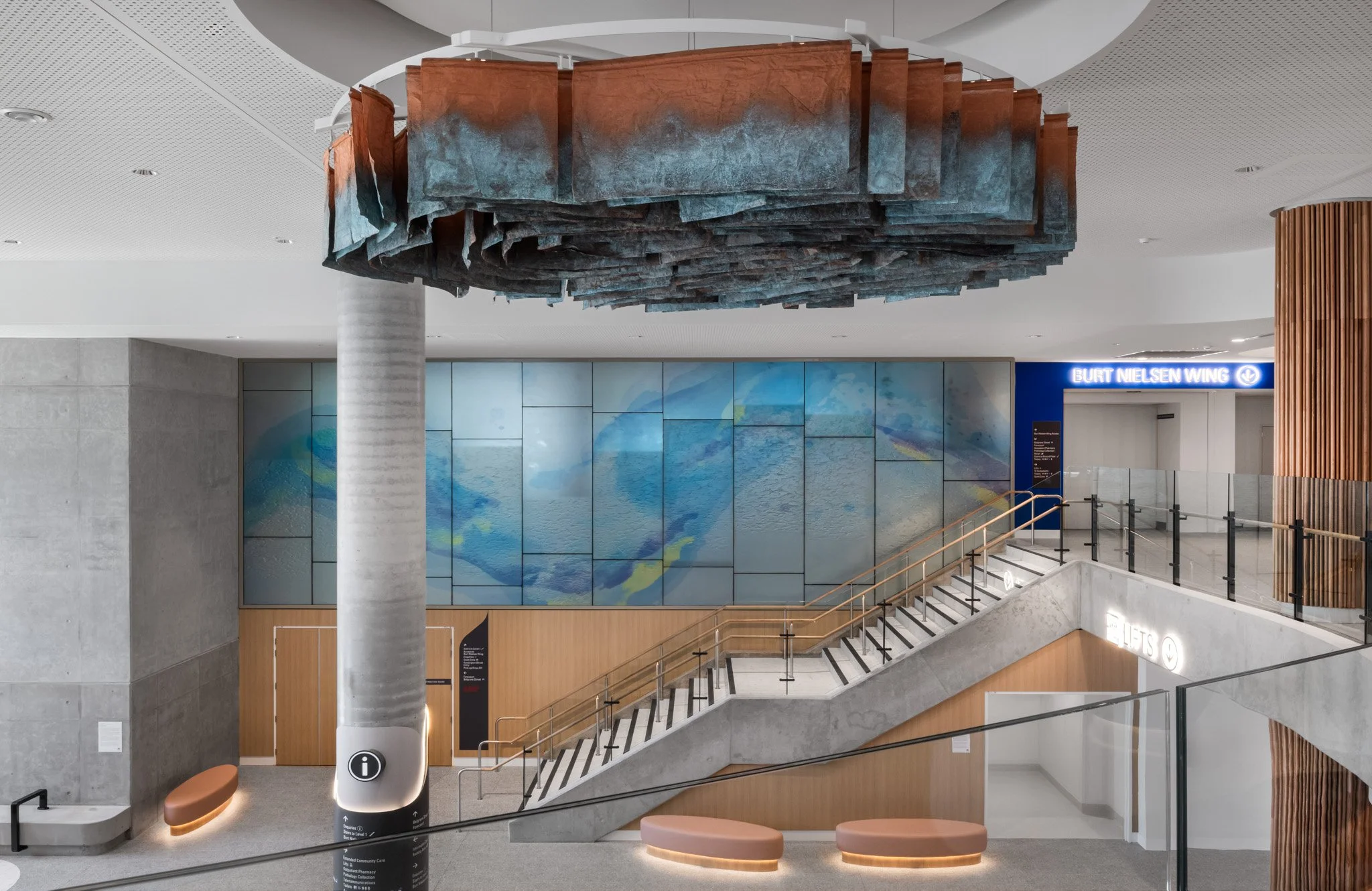
Art has always held a quiet but profound role in shaping how we experience the world around us. Within the built environment, its presence does more than embellish architecture, it transforms it. It gives buildings a voice, places a memory, and communities a shared point of connection.
At its most powerful, art within architecture becomes a bridge between people and place. It invites pause in otherwise transient spaces, offering moments of reflection, curiosity, and emotional resonance. In hospitals, it can soften clinical edges and introduce a sense of calm and humanity. In transport hubs, it can create identity and orientation within the flow of movement. In public spaces, it can become a meeting point, both physically and culturally, where stories are shared and understood.
The integration of art into the built environment also strengthens the fabric of community. It acknowledges local histories, celebrates cultural narratives, and fosters a sense of belonging. When people see their stories reflected in the spaces they inhabit, those spaces become more than functional, they become meaningful. Art has the ability to connect generations, to honour tradition while inviting contemporary interpretation, and to create continuity between past, present, and future.
There is also an inherent wellbeing in this interaction. Studies and lived experience alike show that environments enriched with art can reduce stress, encourage engagement, and promote a sense of comfort and safety. Texture, materiality, light, and form all contribute to a sensory experience that goes beyond the visual, influencing how people feel within a space. Art can uplift, calm, energise, or ground, often all at once.
At Axolotl Art Projects, this understanding sits at the core of every collaboration. Each work is considered not only as an object, but as part of a larger narrative, one that responds to site, to community, and to purpose. Whether through glass, metal, or layered material expression, the intention is always to create work that resonates; that belongs; that enhances both the physical and emotional experience of a place.
In an increasingly fast-paced and urbanised world, the value of art in the built environment becomes even more significant. It reminds us to look, to feel, and to connect. It anchors us within our surroundings while opening us to new perspectives.
Ultimately, art is not an addition to architecture, it is an extension of it. And in that extension lies its greatest contribution: the ability to turn space into place, and place into something deeply human.